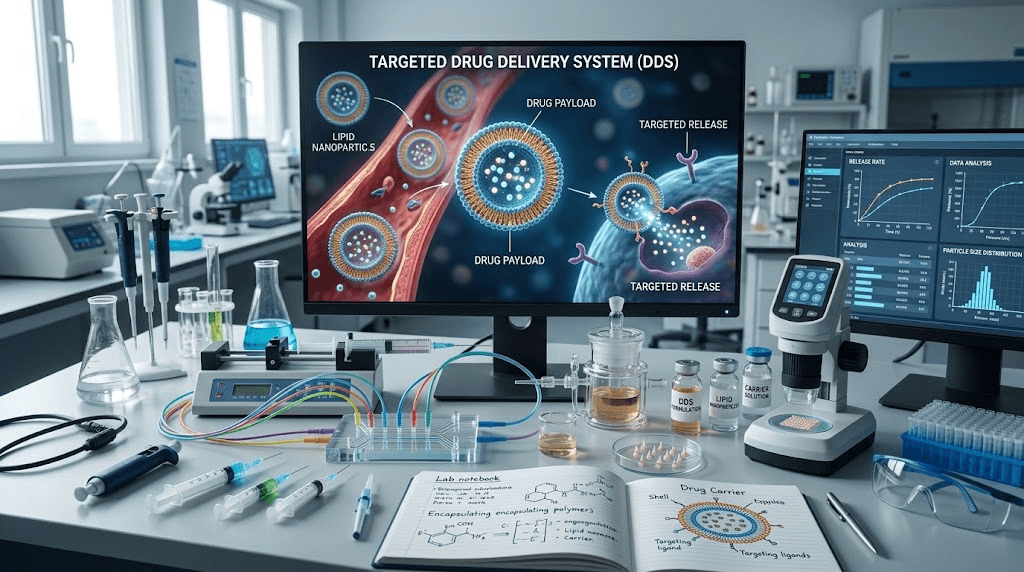
Professor Avi Domb’s research in drug delivery focuses on the design and development of innovative systems that improve the delivery, stability, bioavailability, and therapeutic performance of pharmaceutical agents. The research integrates medicinal and polymer chemistry with pharmaceutical sciences and materials engineering to develop delivery platforms tailored to the physicochemical and therapeutic properties of different drugs.
A major research direction is the development of biodegradable polymers and polymeric carriers for controlled and site-specific drug delivery. These systems are designed to regulate drug release over time, improve localization at the desired site of action, and reduce limitations associated with conventional administration. The group has investigated a broad range of biodegradable polymer systems, including polyesters, polyanhydrides, polycaprolactones, polymer blends, and injectable biodegradable materials.
The research also encompasses injectable drug delivery systems, including biodegradable in situ and injectable polymeric systems that can form localized drug depots. Such approaches provide opportunities for prolonged and localized release of therapeutic agents while minimizing the need for repeated administration. The group has also investigated injectable biodegradable polymers for drug delivery and regenerative medicine.
Another important area is nanotechnology-based drug delivery, including nanoparticles, nanoformulations, and lipid-based systems designed to improve drug solubility, bioavailability, stability, and tissue distribution. These platforms can be particularly useful for poorly soluble compounds and for therapeutic agents requiring specialized delivery strategies.
The group also develops targeted and site-specific delivery approaches, in which the properties of the carrier and the drug–carrier interaction are engineered to influence where and how a therapeutic compound is released. This includes polymeric prodrugs, drug–polymer conjugates, and carrier-based systems for localized therapy.
Additional research directions include oral delivery of poorly soluble drugs and proteins, ocular drug delivery, gene and nucleic-acid delivery, and delivery systems integrated with tissue-engineering scaffolds. The group has investigated, for example, iontophoretic approaches for ocular delivery and polymer carriers for drug delivery in tissue engineering.
Overall, the research aims to develop versatile pharmaceutical delivery technologies that combine controlled release, improved drug performance, and appropriate biological compatibility. By tailoring the chemistry, architecture, degradation behavior, and formulation of the delivery system, the research seeks to overcome formulation and administration challenges associated with conventional therapeutic agents.